What is red light therapy?


You’ve probably heard of red light therapy by now, but maybe you're not totally sure what it actually is.
Over the last few years, red light therapy has been getting a lot of buzz in health, recovery, and skincare. At the same time, the whole concept can feel a bit out there if you don’t know what’s actually happening inside your body.
Simply put, red light therapy is about using specific wavelengths of red and near-infrared light to nudge the body's biological processes. The light sinks into your tissue and helps boost cellular energy - all without surgery, meds, or anything invasive. That’s why people often call it a non-invasive way to support the body’s own repair toolkit.
But how does it actually work at a cellular level? And what do people use it for in real life?
In this article, we’ll take a closer look at what the research says, how the tech works, and the potential benefits it can have for your body.
What is red light therapy?
Red light therapy, also known as photobiomodulation, is basically using specific wavelengths of light to influence how your cells behave. It primarily uses:
- Visible red light
- Near-infrared light
These specific wavelengths are chosen because they can actually soak through your skin and reach the tissue underneath.
It’s also worth clearing up what red light therapy isn't:
- It’s not UV radiation
- It’s not a tanning bed
- It’s not a laser treatment that cuts or burns tissue
- It’s not a traditional heat treatment
Red light therapy is a non-invasive method aimed at supporting your body’s own processes, not replacing them.
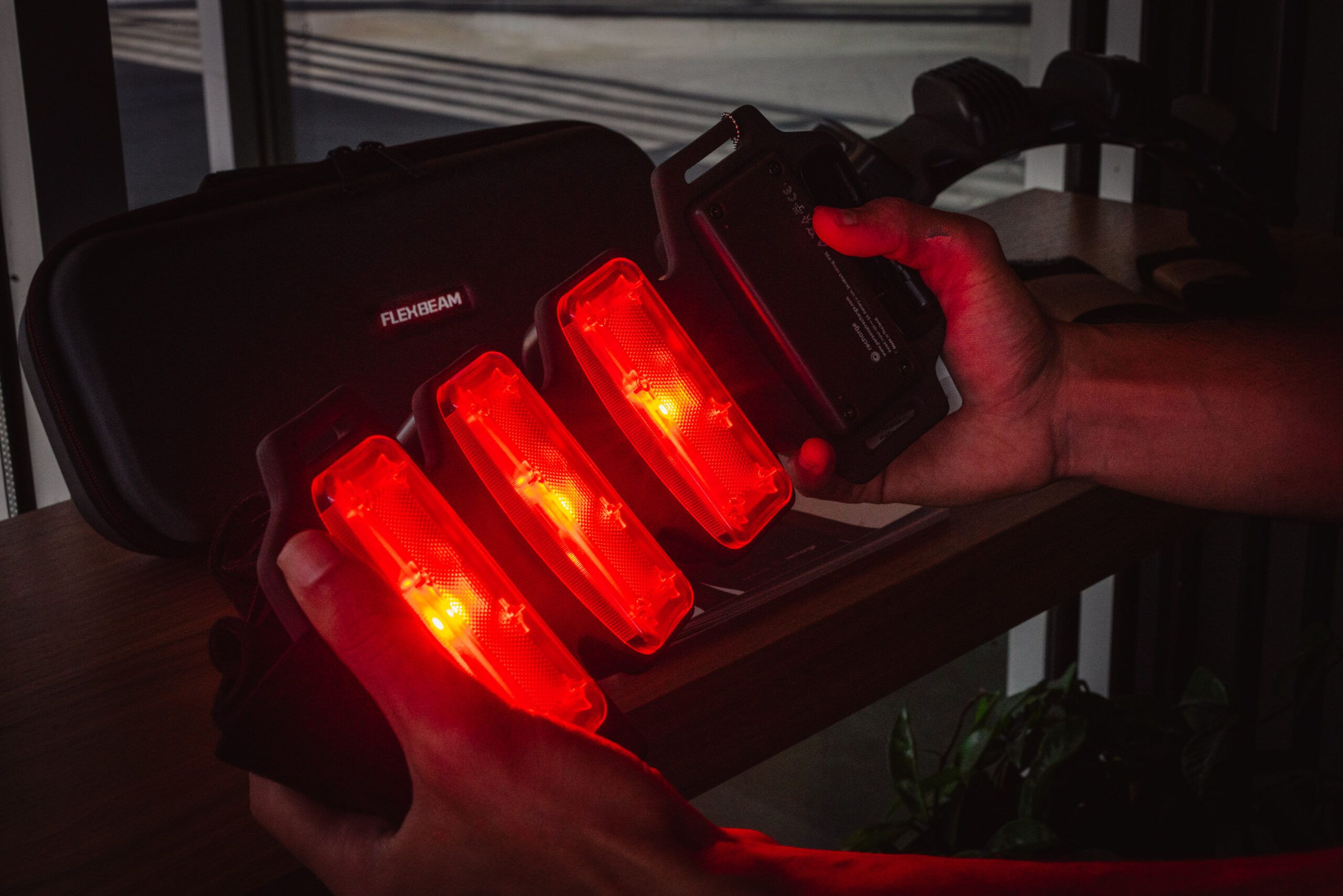
How does red light therapy work?
To understand how red light therapy actually works, we have to go all the way down to the cellular level. Inside almost every cell in your body, there are these tiny structures called mitochondria. Think of them as the cell's power plants -they're responsible for producing energy in the form of ATP (adenosine triphosphate).
ATP is essential for stuff like:
- muscle movement
- tissue repair
- nerve function
- recovery
- general cell activity
When your body is overworked, injured, or under stress, energy production can get a bit sluggish. That’s where red light therapy steps in. The mitochondria soak up the red and near-infrared light, which can kickstart biochemical processes that make more ATP available.
A simple way to look at it is: Light → hits the mitochondria → boosts ATP production → supports the body’s natural functions.
This doesn't mean the light heals the body all on its own. It just means the cells get better working conditions to do exactly what they’re already programmed to do.
Dr. Zulia Frost about therapy: What it is and how it supports the body
Red and near-infrared light therapy delivers specific wavelengths of light that interact with cells at a mitochondrial level, particularly targeting cytochrome c oxidase within the respiratory chain. This photonic stimulation may enhance ATP production, support local circulation through nitric oxide release, and modulate inflammatory responses. These mechanisms contribute to improved cellular efficiency and communication across tissues. As a result, it can help create an environment that supports recovery, relaxation, and overall physiological balance, while remaining a practical, non-invasive tool for ongoing wellness and performance support.
What does red light therapy do and what affects does it have on the body?
Red light therapy involves using red and near-infrared light to support the body’s natural processes at a cellular level, which in turn leads to a bunch of different health benefits.
The main effects of red light therapy include:
Support for muscle and joint pain
Can help reduce the feeling of pain and improve how your muscles and joints actually work. Read more about the effect on pain and muscle issues here.
Reduced stiffness and better mobility
Often used to help with movement in areas that feel stiff or are suffering from repetitive strain.
Faster recovery after training
Studies suggest that red light therapy can help dial down muscle soreness and support the recovery process after you've been active. Read more about red light therapy and recovery here.
Support for strain-related issues
Used in sports and rehab as a supplement for overexertion and localized tissue issues.
General well-being and circulation
Lots of people use red light therapy as part of their overall health and wellness routine. Read more about optimizing your health with red light therapy here.
In sports and rehab circles, it’s often used to back up physical therapy and training programs.
At the same time, it’s important to point out that everyone responds differently. Red light therapy isn’t a magic fix for everything, but rather a tool you can use as part of a bigger health picture.
Want to learn more? Check out the research and studies done by our specialists right here.
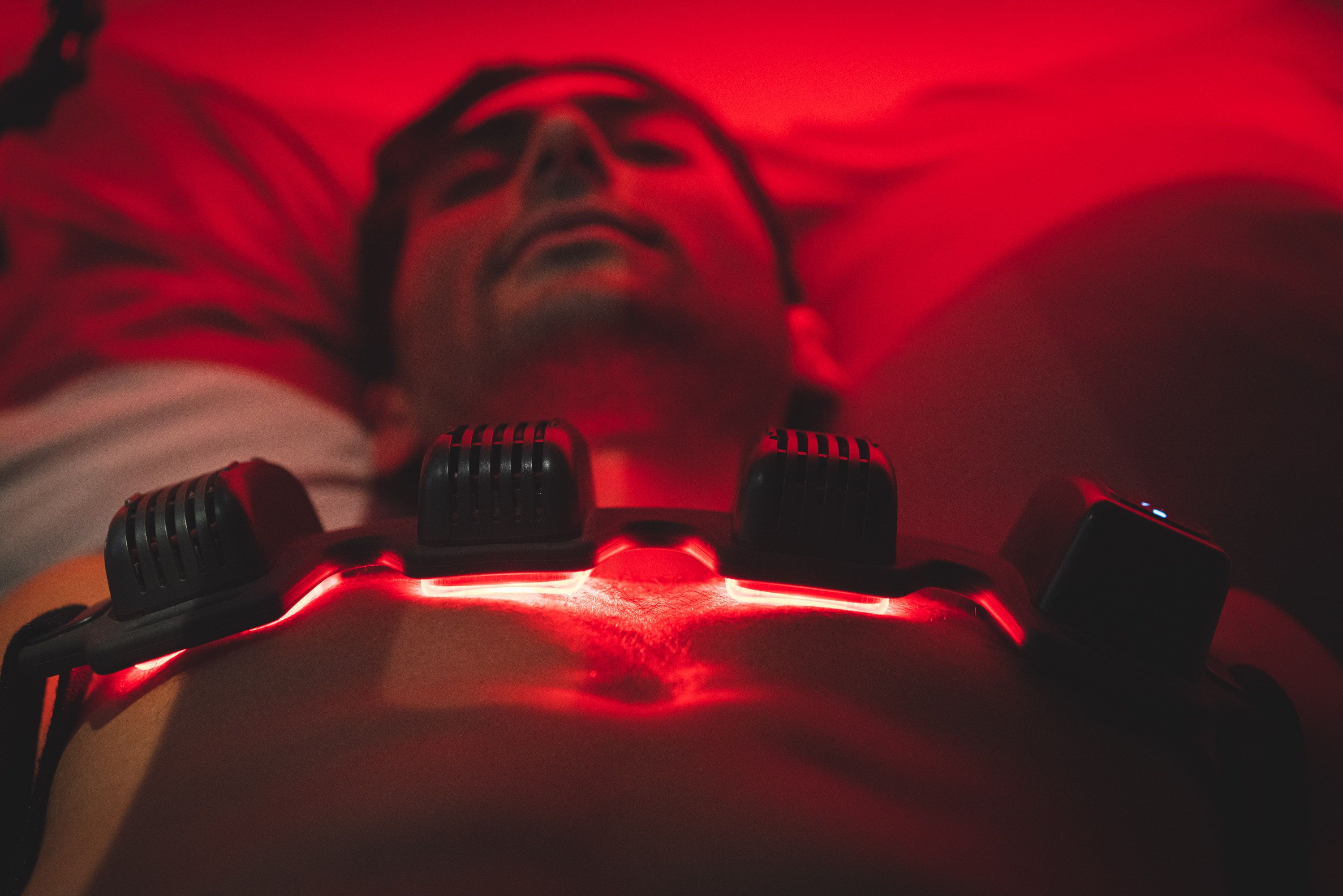
What’s the difference between red and near-infrared light?
Both are used in red light therapy, but they bring different things to the table.
Red light has a shorter wavelength and works more on the surface. It’s mostly used for skin-related stuff and tissues close to the surface.
Near-infrared (NIR) light has a longer wavelength, which means it can reach deeper into the body. This makes it a better fit for dealing with muscles, tendons, and joints.
It’s important to understand that not everything labeled red light actually works deep in your tissue. To get real results for muscles and joints, you need the right wavelength and enough penetration.
By combining red and near-infrared light, you can target both the surface and deeper structures at the same time—which is really the key to effective treatment and recovery.
Read more about how to choose the right wavelength for red light therapy here.
When can you use red light therapy?
Red light therapy can be especially useful when you're dealing with muscle or joint pain, stiffness, poor circulation, or if you just want to bounce back faster after a workout. It can also help with general body discomfort and keeping your skin healthy.
For easy home use, you can just place a portable device on the area that needs the most attention, like your calves, thighs, knees, or shoulders. Just a few minutes of red light therapy at home each day can help with blood flow, lowering inflammation, relieving pain, and boosting energy. Having infrared light at home makes it easy to turn this into a small, but effective, daily habit.
Red light therapy and infrared light - here’s how it can help your body
Red light therapy can be a real help when you want to ease pain, shake off fatigue, or bounce back faster after being active. It works just as well at a clinic as it does for home treatment, but for the best results, you’ve got to use it regularly and in the right doses.
Just remember to always follow the recommendations for wavelength and treatment time. And, of course, check in with a healthcare professional if you have any underlying medical conditions or issues that just won't go away.
Frequently asked questions about red light therapy
Yes, red light therapy is actually used quite often for back pain.
Red and near-infrared light can soak into the tissue and influence how your cells produce energy. This can help support the body’s natural repair processes and provide some temporary pain relief.
People use it for everything from sudden muscle tension to more long-term strain, though keep in mind that how well it works varies from person to person.
Yes, it’s actually used quite a bit for back pain.
Red and near-infrared light can soak into your tissue and give your cells' energy production a nudge. This helps support the body’s natural repair work and can provide some temporary pain relief.
People use it for both sudden muscle tension and more long-term, wear-and-tear issues, but just remember that everyone reacts to it a little differently.
How quickly you see results really varies.
Some people notice a difference pretty fast when it comes to temporary muscle stiffness, while more long-term issues usually require consistent use over time.
Factors that play a role include:
- What you're using it for
- How long you’ve had the issue
- How often you’re doing the treatments
- Individual differences
Generally speaking, being consistent is more important than any single session.
The amount of light you need depends on what you're trying to achieve, the wavelength, and the intensity.
Generally, you'll want to use red light therapy several times a week over a period of time to really see the benefits. If the dose is too low, you might not notice much of a difference, but a higher dose isn't necessarily better either.
It's a good idea to follow the manufacturer's guidelines and start out slow, especially when you're using it at home.
There isn't just one best wavelength for everything.
Usually, it breaks down like this:
- Red light (around 630–670 nm) for issues closer to the surface.
- Near-infrared light (around 800–850 nm) for deeper tissue like muscles and joints.
The ideal dose depends on what area you're treating and what you're trying to achieve. For a deeper dive into wavelengths and dosing, you can check out our guide on how red light therapy works.