Is leg pain slowing you down? Here’s how to start feeling like yourself again


Leg pain can feel like a dull ache, stinging, tingling, or a burning sensation, and the pain can happen both while resting and during activity. Many feel the discomfort at night or when lying still, while others notice it more clearly when walking, jogging, or running. The pain can vary from mild stiffness to intense discomfort, and often becomes more noticeable in different situations, whether you’re resting, jogging, or sleeping.
In this article, you’ll get an overview of:
- Common causes of leg pain in different situations (when lying down, resting, walking, jogging, or running)
- Steps you can take yourself to relieve pain and reduce stiffness
- How red light therapy can support recovery and improve circulation
- When it’s important to see a doctor
With the right knowledge and steps, you can reduce discomfort, improve mobility, and have a more comfortable everyday life.
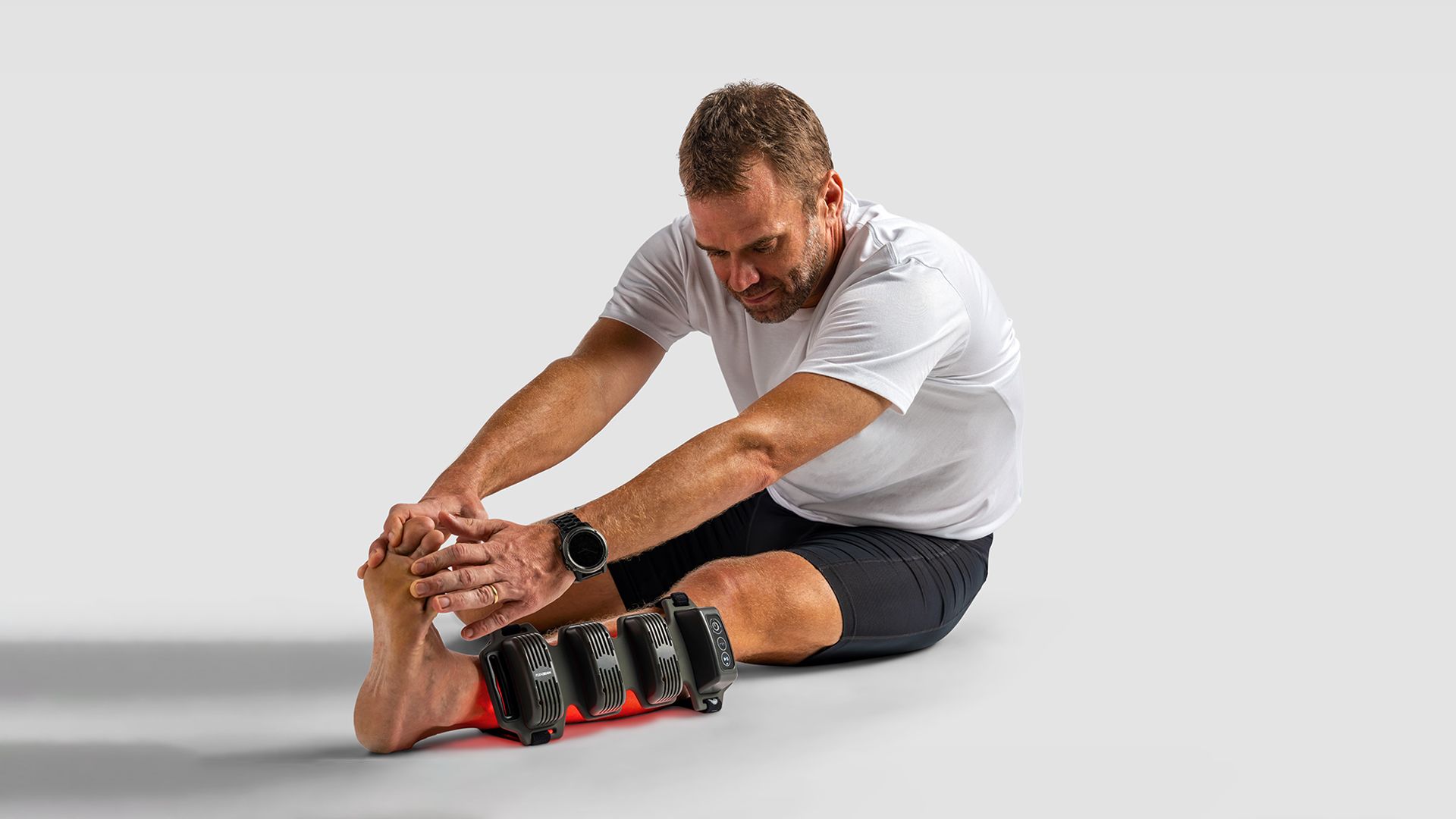
What is leg pain? General causes of aching legs
Leg pain can have several causes, such as tense muscles, overexertion, poor circulation, or nerve issues. It’s important to understand that pain isn't always caused by an injury: often, it’s about how muscles, tendons, and blood vessels function together during activity and rest.
What does leg pain feel like? Symptoms of leg pain
Leg pain can be experienced in various ways and have several different causes. Some describe aching legs as a deep, dull feeling, while others experience more intense and sharp nerve pain. The pain can be in the thighs, calves, knees, ankles, or feet, and some specifically feel pain in the calf and thigh.
How the pain feels often gives a clue to what’s behind it. Muscle-related pain usually appears after exertion and feels like soreness or stiffness. Nerve pain, on the other hand, can feel burning, electric, or radiating. Circulation problems can cause a heavy feeling or cramps, especially when at rest. Understanding which type of pain you have is the first step toward the right treatment.
I have aching pain in my legs
Aching pain in the legs is often described as a deep, dull, or pressing feeling. Many also experience stiffness and tenderness when touched. This type of pain is common after physical activity, standing for long periods, or repetitive strain.
Typical symptoms:
- A feeling of "heavy legs"
- Tenderness when pressed
- Stiffness, especially after resting
- Worsening after exertion
The cause is often muscle tension, minor inflammation, or overexertion. When the body starts the repair process, the pain can actually become more noticeable during rest.
Do you have nerve pain in your legs?
Unlike aching muscles, nerve pain in the legs is often felt as sharp or burning. Many describe it as electric shocks or a feeling of numbness that radiates downward. This is often due to a pinched nerve, either in the back or locally in the leg.
Typical symptoms:
- Burning or shooting pain
- Radiating from the lower back to the thigh or calf
- Tingling or numbness
- Pain that can get worse at rest
Sciatica is a common example of nerve involvement that can cause pain down one leg.
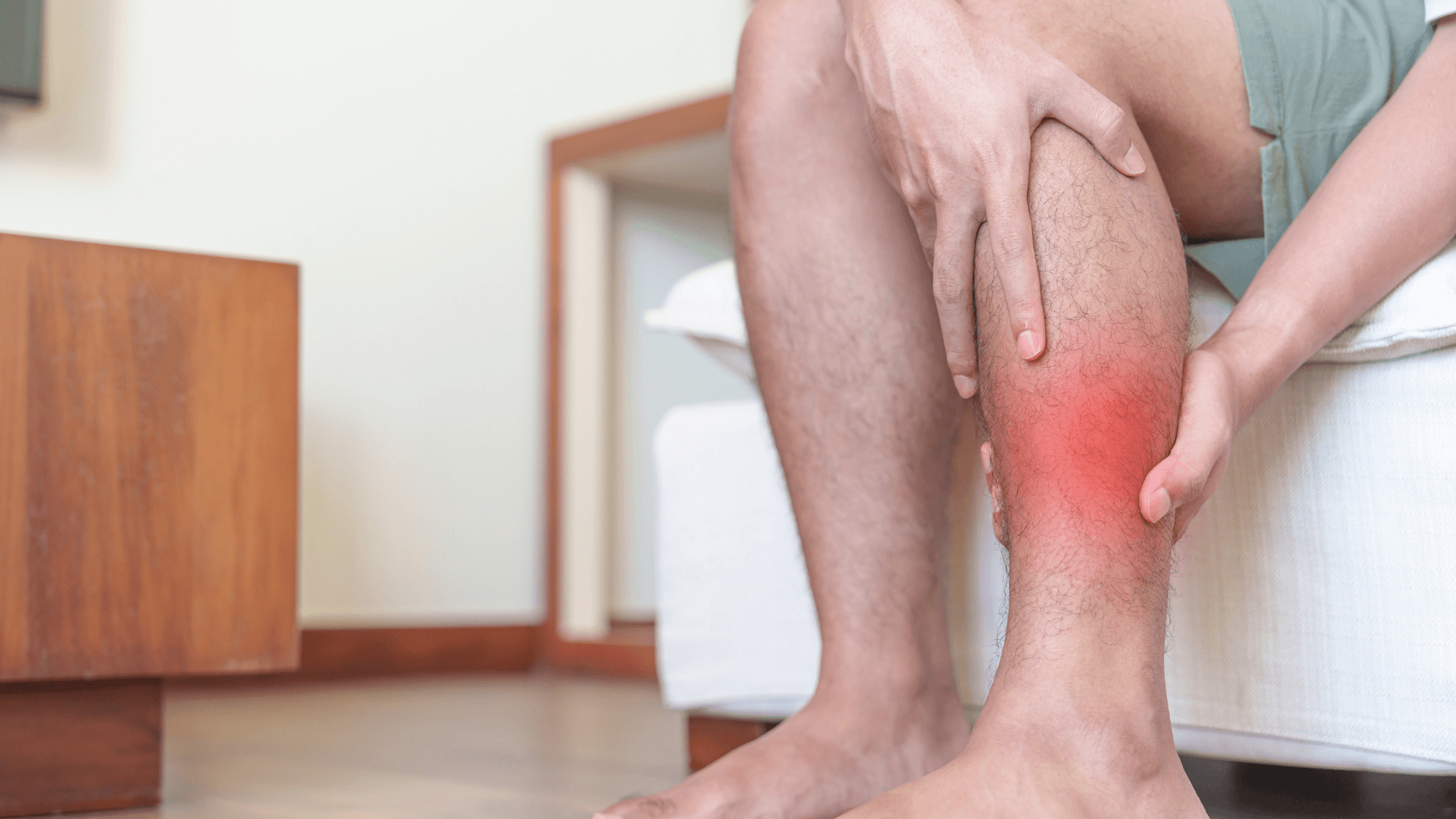
I have pain radiating from my calf up to my thigh
Pain in the calf and thigh can have several causes. In the thigh, muscle strains and overexertion are common, especially in physically active people. In the calf, cramps, circulation issues, or tendonitis can be the triggers.
Typical symptoms:
- Calf cramps, especially at night
- Tight or sore muscles in the thigh
- A heavy feeling due to poor circulation
- Local tenderness after activity
If the pain is persistent, one-sided, or accompanied by swelling and redness, a doctor should be contacted for further evaluation.
Leg pain at night and when resting – what could be the cause?
Many people find that leg pain becomes more obvious at night or when lying still. This is completely normal, and it’s partly because the body is in "rest mode":
- Reduced circulation: when you lie down, the muscles aren't working as actively, and blood flows more slowly back to the heart. This can make leg muscles feel tired, stiff, or sore.
- Increased focus on discomfort: when you lie still, you become more aware of small aches that might not be noticed during the day.
- Repair processes and inflammation: at night, the body’s natural recovery is activated, and minor inflammation or muscle tension can become more noticeable.
Tips for relieving leg pain when lying down or at night:
- Elevate your legs: place a pillow under your calves or ankles to improve circulation.
- Light stretching before bed: focusing on calves, thighs, and hips can reduce stiffness and pain.
- Red light therapy: targeted use of red or near-infrared light can support muscle repair and reduce discomfort.
- Heat treatment: a warm bath or a heating pad loosens tense muscles and makes it easier to fall asleep.
By taking a few simple steps, you can reduce discomfort when you experience leg pain at night or while lying down, and get a better night's sleep.
Dr. Zulia Frost answers: How to relieve leg pain
Leg pain is a common complaint and can arise from several causes, including muscle overuse, poor circulation, nerve irritation, or prolonged sitting or standing. In many cases, these factors are linked to some form of mechanical compression, such as tight muscles, disc changes, or joint degeneration, which can place pressure on surrounding tissues and nerves. Addressing the underlying cause is key, reducing muscular tension and improving blood flow may already provide noticeable relief and support better mobility. Strategies such as targeted movement, structured recovery routines, and red and near-infrared light therapy may help relax muscles, support circulation, and assist the body in restoring balance. Early attention can reduce the risk of progression into more persistent or limiting conditions.
My legs hurt when I walk – what can I do?
If your legs hurt when you walk, there can be several causes. Often it's due to muscle fatigue, overexertion, or poor circulation. Fortunately, there are several simple steps that can make your walk more comfortable:
- Take breaks along the way: stop and shake out your legs, especially if you’re going for long walks. This helps the blood circulate better.
- Wear good shoes: comfortable shoes with the right support reduce the strain on calves, knees, and feet.
- Light warm-up before your walk: small stretching exercises for calves and thighs increase flexibility and reduce stiffness.
- Change the surface: if possible, walk on softer ground like grass or gravel to take the pressure off your muscles.
- Red light therapy: after your walk, targeted use of red or near-infrared light on your calves and thighs can contribute to better recovery and reduced discomfort.
By combining these simple measures, you can reduce leg pain when walking and get more enjoyment out of both short and long walks.

Running and jogging make my legs hurt
If you experience leg pain when jogging or running, it’s important to look at the load, technique, and recovery. Running involves a higher impact than walking, and the muscles in the calves, thighs, and hips have to work harder to stabilize the body. If the intensity is increased too quickly, it can lead to overexertion, stiffness, and pain.
When you train and feel pain, take these steps:
- Increase gradually: avoid increasing distance or intensity too quickly. The body needs time to adapt.
- Prioritize warming up: dynamic movements before your session prepare muscles and tendons for the strain.
- Listen to your body: with persistent pain, it might be wise to reduce the intensity or take a rest day.
- Focus on recovery: stretching, light movement, and steps that support circulation can reduce stiffness after a workout.
- Use the right shoes: good running shoes with proper cushioning can reduce the load on your calves and knees.
It's normal to feel muscle soreness after a workout, but sharp, one-sided, or increasing pain should be taken seriously.
Tips to reduce pain and discomfort in the legs
Having sore legs can be frustrating, whether it happens when you’re lying down, walking, jogging, or running. Luckily, there are several things you can do yourself to relieve pain, reduce stiffness, and support the body’s natural recovery.
Activity: light movement to increase circulation
Even though it might be tempting to keep your legs completely still, light movement can actually help reduce pain. When you move, the "muscle pump" in your legs is activated, helping blood return to the heart and improving circulation.
This can reduce:
- The feeling of heaviness
- Stiffness
- Dull or aching pain
- Swelling
A calm walk, light cycling, dynamic stretching, or simple circulation exercises for the ankles and calves can be enough to stimulate blood flow without overworking the muscles. For many, 5–15 minutes of light activity can make a noticeable difference, especially for pain that occurs during rest or in the evening.
Self-care
If the pain isn't due to a serious condition, the following steps can help:
- Light movement before bedtime
- Stretching calves and thighs
- Elevating your legs for 10–20 minutes
- Massage or foam rolling
- Heat treatment
For many, it’s all about supporting the body's natural recovery processes.
Red light therapy as relief for the legs
Red light therapy (photobiomodulation) uses red and near-infrared light to stimulate the mitochondria in the cells. This can contribute to:
- Increased energy production (ATP): cells produce more energy, which can help muscles recover faster after exertion.
- Better circulation: red light therapy can help increase blood flow, which reduces heaviness, stiffness, and dull aches.
- Reduced inflammation: red light can dampen minor inflammatory processes in muscles and tendons, relieving pain and discomfort.
- Support for muscle repair: with regular use, red light therapy can promote healing processes in the muscles and connective tissue.
For leg pain at rest, targeted use on the calves, knees, or thighs can support recovery and circulation.
Check out our blog article on how red light therapy can help with different types of pain here.
Helps with leg pain
"Great results! We like the device and notice the effects with reduced pain in the legs. It’s adjustable and can be used on all parts of the body. We also appreciate the different plugs that make it easy to take the device on trips abroad." — Susan S.
Experience the benefits of red light therapy. With our portable device, you can easily use red light therapy at home, at the office, or on the go. Want to try FlexBeam? Check it out here!
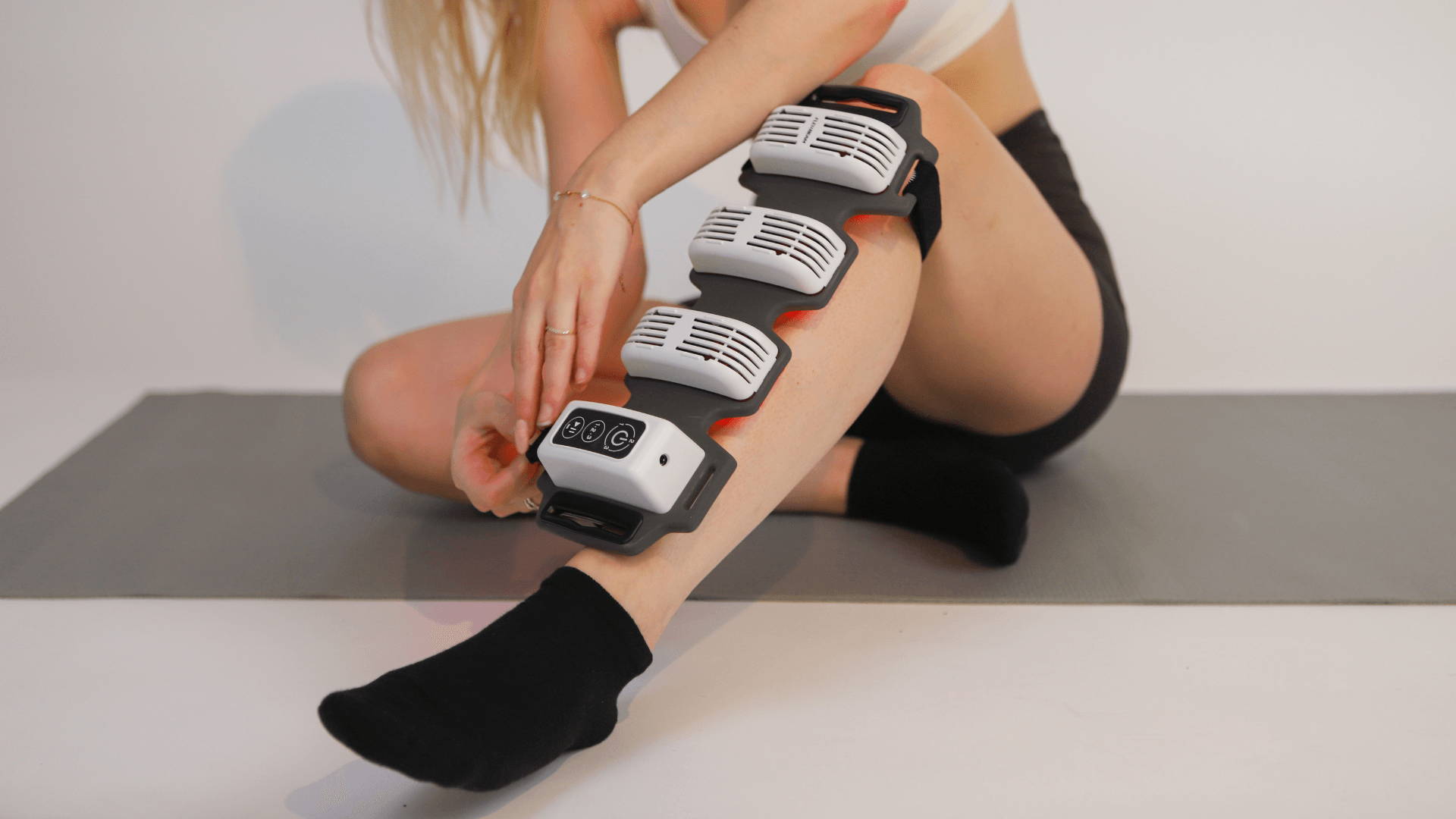
FlexBeam – targeted red light therapy for home use
FlexBeam combines red and near-infrared light in a flexible, portable device that can be placed directly on the area where you experience pain. It's often used as part of:
- A daily recovery routine
- Pain relief after exertion
- An evening routine before bed
Read more about how FlexBeam works and how you can use it as part of your self-care here.
When should you seek help for leg pain?
Contact a doctor if you experience:
- Sudden, severe pain
- Swelling and redness in one calf
- Numbness or loss of strength
- Pain that lasts for several weeks
These can be signs of underlying conditions that require a medical evaluation.
In short
Leg pain can have various causes and be experienced as aching, nerve-based, or linked to poor circulation, and it's influenced by many factors. Light activity, self-care, and red light therapy can help relieve discomfort and support the body's natural recovery. With FlexBeam, you can easily provide targeted red light therapy at home (on calves, thighs, or knees) to improve circulation, reduce pain, and promote repair. If you experience sudden, severe, or long-term pain, or notice swelling and numbness, you should always see a doctor.
FAQ - common questions about leg pain
Poor circulation can cause a heavy feeling, dull aches, cramps, or throbbing legs, especially when you’re sitting or lying still. Many people also notice that their calves feel tight or swollen after sitting or standing for a long time.
Nerve pain is often felt as a burning sensation, stinging, or like electric shocks. The pain can radiate from the lower back down into the thighs or calves, and some people experience numbness or a "pins and needles" sensation in the leg. This kind of pain can become more noticeable when you're resting or during the night.
Light activity, stretching, massage, or heat treatment can help relieve the discomfort. Targeted red light therapy, like using FlexBeam, can support blood circulation, reduce inflammation, and promote muscle repair. For persistent, severe, or one-sided pain (or if you experience swelling and numbness) you should see a doctor.
Pain in the calves while walking can be caused by muscle fatigue, overexertion, cramps, or poor circulation. For some, nerve issues or strain on the tendons can also cause pain during activity. Light warm-ups, stretching, and gradually increasing your activity level can help reduce the discomfort.
There can be many reasons, ranging from muscle and circulation issues to nerve pain and overexertion.