Post-workout recovery: Why rest is actually your most important session


Recovery after training is what decides whether you actually get better or just stay tired. A lot of people train hard, but underestimate what happens between sessions. That’s when your body actually builds itself back up.
At Recharge Health, we work with everyone from pro athletes to health enthusiasts every day. One thing we see over and over: progress isn't just about the effort you put in; it’s about recovery.
This article gives you a solid understanding of what recovery really is, why it matters, and how to actually optimize it in practice.
What is recovery, and why does it matter?
Recovery is the body’s way of repairing, adapting, and strengthening itself after a workout. When you train, you’re actually breaking your body down. When you recover, you’re building it back up—stronger than before.
This process is called supercompensation.
Without enough recovery, you end up with:
- Reduced performance over time
- Higher risk of injuries
- Weakened immune system
- Lower gains from your training
Simply put: you don't get better from the workout, you get better from the recovery.
Expert tip from Recharge Health: if your performance is plateauing or even dropping, it’s often a sign that you need more rest, not more training.
The three most important pillars for good recovery
Sleep: The body’s main repair phase
Sleep is the most effective form of recovery there is. This is where:
- Protein synthesis speeds up
- Muscles get repaired
- Hormones get balanced
Most people need 7–9 hours a night for optimal recovery. Bottom line: Not enough sleep = worse results, no matter how hard you train.
Nutrition: Fueling your recovery after training
Eating right is key to bouncing back quickly. Here are the three main components:
- Hydration: You should aim to replace about 150% of the fluid you lost during your workout.
- Carbohydrates: These refill your glycogen stores (your body's fuel tanks).
- Protein: This is what actually repairs your muscle tissue.
A lot of people make the mistake of only focusing on protein. But without enough energy (carbohydrates), you're just not going to get optimal recovery.
Rest: Active vs. Passive recovery
Rest isn't just about lying still.
- Passive recovery: total rest (sleeping, lounging on the sofa).
- Active recovery: light movement (a walk, an easy bike ride).
Active recovery gets your blood circulating and can actually speed up the recovery process, especially after a really tough session.

Kristin Harila, Professional adventurer and the world's fastest mountain climber.
"When I’m prepping for major expeditions, recovery becomes just as important as the training itself. FlexBeam has become a natural part of my daily routine."
Optimization: Taking your recovery to the next level
Once you have the basics down, you can start optimizing even further.
Active recovery: When should you get moving?
Light activity is often better than complete rest when:
- You’re feeling stiff and sore
- You had an intense workout the day before
Examples:
- A 20–30 minute easy walk
- Light cycling
- Mobility exercises
Mental recovery: The underrated factor
Stress has a direct impact on your recovery. To optimize it:
- Cut down on screen time in the evening
- Prioritize winding down
- Use breathing techniques or calm music
Mental calm = better physical recovery.
Red Light Therapy (FlexBeam): Targeted Recovery
While a walk gives you general recovery, red light therapy offers targeted recovery. Red and near-infrared light:
- Stimulates the mitochondria
- Boosts ATP production (the cell's energy)
- Speeds up cell repair
- Can reduce inflammation
This makes it especially effective for:
- Heavily strained muscles
- Localized pain and stiffness
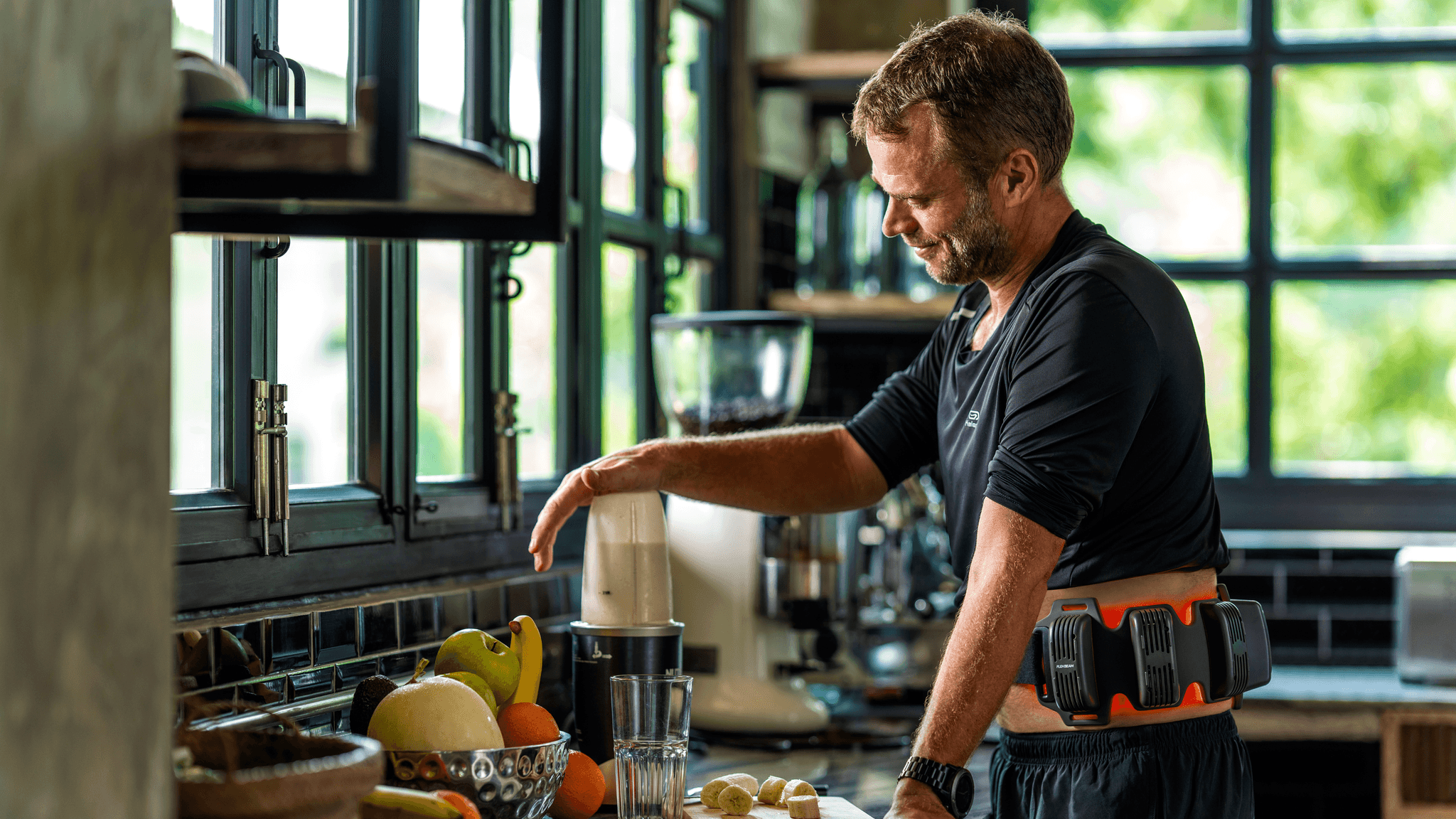
A practical example: After a heavy leg day, you can use red light therapy directly on your quads to speed up recovery, rather than just relying on general rest.
Read more about how red light therapy works for recovery.
FlexBeam for faster recovery.
"FlexBeam has really impressed us. Our physiotherapist said straight out that rehab would never have gone this fast without this product. We're experiencing the same thing—recovery has been noticeably better, and we find FlexBeam easy and safe to use in our daily routine. Highly recommended for anyone looking for effective support in recovery and injury follow-up." – Tim A.
Optimal recovery when training every day: How to avoid overtraining
It is possible to train every day, but it requires a solid structure. Is it a bad idea to do strength training two days in a row? Not necessarily, as long as you vary your muscle groups and intensity.
Key principles:
- Don't train the same muscle group hard two days in a row.
- Vary your intensity (hard / light / moderate).
- Follow the 10% rule for progression: Increase your training volume, load, or intensity by a maximum of 10% per week. This gives your body time to adapt and lowers the risk of injury.
Recovery is what makes consistency possible. Without it, you're going to hit a wall sooner or later.
Summary: Recovery and training
Recovery isn't a break from progress—it’s the very foundation of it.
When you prioritize:
- Sleep
- Proper nutrition
- Smart use of recovery tools
...you set yourself up for better performance, fewer injuries, and long-term progression.
Ready to cut down your recovery time? See how FlexBeam can help you get back to training faster here.
FAQ: Everything you need to know about recovery
The best recovery is a combination of good sleep, proper nutrition, and effective tools like red light therapy for targeted recovery.
Generally, you should give the same muscle group about 48 hours of rest before your next heavy session.
24–72 hours is normal. This is known as DOMS (Delayed Onset Muscle Soreness).
Yes, protein is essential for repairing muscle fibers after a workout.
Yes, it's a convenient way to get a quick dose of protein and carbohydrates right after a session.