Hormonal Imbalance: How to Support Your Hormones at the Cellular Level


Do you feel like you haven’t quite been yourself lately?
Maybe your body feels heavy or unpredictable. Your mood fluctuates more than usual, your energy is low, you’re not sleeping well, or your menstrual cycle has become irregular. Many women experience these less specific symptoms at different stages of life without fully understanding what’s behind them.
Hormones influence almost every system in your body. Energy, sleep, fertility, mood, stress response, digestion, and recovery all rely on healthy hormonal signaling. When your hormones are out of balance, the effects can be felt throughout your entire body.
Unfortunately, many women never get clear answers. Instead, individual symptoms are often treated separately, without addressing what's happening inside the body at the cellular level.
In this article, we'll explore what hormonal imbalance is, common symptoms in women, how stress and modern lifestyles affect hormone health, and how natural strategies, including quality sleep, stress management, gut health, and red light therapy, may help support your body's natural hormonal balance.
What is hormonal imbalance?
Hormonal imbalance occurs when your body produces too much or too little of one or more hormones, or when hormones aren't communicating effectively with your cells.
Hormones act as your body's chemical messengers. They're produced in organs such as the ovaries, thyroid gland, and adrenal glands, where they help regulate everything from your menstrual cycle and fertility to energy levels, sleep quality, and mood.
Research also suggests that chronic stress, poor sleep, and circadian rhythm disruption can influence hormone regulation and your body's natural signaling pathways.
While many factors can contribute to hormonal imbalance, three stand out in today's lifestyle.
Chronic stress and elevated cortisol
Long-term stress can affect the production of progesterone, estrogen, and melatonin. When your body remains in "survival mode," it prioritizes immediate survival over recovery, repair, and healthy hormone production.
Circadian rhythm disruption and artificial light
Limited exposure to natural daylight combined with excessive screen time in the evening can interfere with melatonin production and your body's internal clock.
Over time, this may affect hormone production, sleep quality, and overall energy levels.
Poor cellular energy and overworked mitochondria
Hormones aren't created out of thin air.
Your body requires energy at the cellular level to produce and regulate hormones efficiently. That's why your mitochondria, the tiny power plants inside your cells, play such an important role in maintaining hormonal balance.
Common symptoms of hormonal imbalance in women
Hormonal imbalance can look different from one woman to another. Some women experience only one or two symptoms, while others notice several at the same time.
Common signs of hormonal imbalance include:
- Irregular menstrual cycles
- Painful periods or increased menstrual cramping
- Mood swings and irritability
- Low energy and persistent fatigue
- Difficulty falling asleep or staying asleep
- Headaches or migraines
- Acne and other skin changes
- Weight fluctuations and bloating
- Reduced libido
- Brain fog and difficulty concentrating
Why traditional hormone treatments often miss the bigger picture
When women seek help for hormonal symptoms, treatment often focuses on managing the symptoms themselves.
Birth control pills, hormonal IUDs, or hormone replacement therapy can be appropriate options for some women, but many still feel like something is missing.
One important reason is that producing hormones is an energy-intensive process.
Your body needs:
- Essential nutrients
- Stable stress levels
- Restorative sleep
- Healthy mitochondria
- Adequate cellular energy
Without enough cellular energy, hormone production, signaling, and metabolism may all become less efficient.
This may help explain why symptoms sometimes return once symptom-focused treatment is discontinued. While symptoms may improve temporarily, the underlying biological processes that support healthy hormone function may still need attention.
This doesn't mean conventional treatments are ineffective. Rather, many women benefit from a more comprehensive approach that also supports sleep, stress resilience, gut health, circadian rhythms, and cellular energy.
Biohacking women's health: the hidden role of mitochondria in hormonal balance
Most people know mitochondria as the "powerhouses" of your cells because they produce ATP - the energy that fuels nearly every process in your body.
What many people don't realize is that mitochondria also play a central role in hormone production. In fact, the synthesis of several key hormones - including progesterone, estrogen, and cortisol - begins inside the mitochondria.
For this process to work efficiently, your body depends on:
- Adequate cellular energy
- Healthy oxygen delivery
- Efficient cell signaling
- A balance between stress and recovery
When you're exposed to chronic stress, poor sleep, or persistent inflammation, mitochondrial function can decline. As your cells produce less energy, multiple systems throughout the body - including hormone regulation, recovery, and inflammation - may also be affected.
This is one reason mitochondrial health has become an important focus in both biohacking and functional medicine.
The goal isn't necessarily to "hack" your hormones directly. Instead, it's to create the best possible environment for your body's own hormone-producing systems to function optimally.
That's why experts often emphasize:
- Sleep quality
- Circadian rhythm
- Stress management
- Gut health
- Light exposure
- Healthy inflammation levels
Red light therapy has also become an increasingly popular tool in this space.
Research suggests that specific wavelengths of red and near-infrared light may support mitochondrial energy production through a process known as photobiomodulation.
While research on women's hormonal health is still evolving, scientists continue to explore how improving mitochondrial function may support energy production, recovery, and overall hormonal health.
What can you do about hormonal imbalance? 4 natural ways to support your hormones
Small daily habits can make a meaningful difference over time. Here are four science-informed strategies that may help support healthy hormone balance naturally.
1. Restore your circadian rhythm
Your hormones follow your body's internal clock.
Poor sleep and excessive artificial light at night can disrupt melatonin, cortisol, and estrogen regulation.
Simple habits that can help include:
- Get outside in natural sunlight soon after waking.
- Limit screen time before bed.
- Keep a consistent sleep schedule.
- Avoid overstimulation late in the evening.
Recent research is also exploring the relationship between melatonin and red light, and how it may influence sleep, cellular function, and recovery.
2. Reduce emotional and physical stress
Chronic stress can affect your hormones more than you might realize. Persistently elevated cortisol levels can influence hormones such as progesterone and contribute to hormonal imbalance.
Ways to help reduce stress include:
- Breathing exercises: Slow, intentional breathing can help activate the parasympathetic nervous system, often referred to as the body’s “rest and digest” mode. This can help calm the stress response and reduce feelings of tension or unease.
- Gentle walks: Low-intensity physical activity, especially outdoors, can help improve circulation, reduce stress levels, and support the body’s natural regulation of hormones and energy.
- Yoga or stretching: Gentle movement combined with focused breathing can help reduce muscle tension, increase body awareness, and signal to the body that it’s safe to relax.
- Time in nature: Several studies suggest that spending time in green spaces may reduce perceived stress and help lower stress hormone levels. Even short periods in nature can have a positive effect on mental recovery.
- Enough rest and recovery: Recovery is about more than just sleep. Taking breaks throughout the day, making time to relax, and stepping away from constant stimulation from work, screens, or exercise can all play an important role in supporting hormonal balance.
Many people also find that their body and mind feel more balanced when sleep quality improves and they allow enough time for recovery. Over time, this can help build a more resilient stress response and create better conditions for the body to maintain healthy hormone production.
3. Support your gut and the estrobolome
The gut plays an important role in hormonal balance. The bacteria in your gut influence, among other things, how estrogen is broken down and eliminated from the body.
When gut health is compromised, it can become more difficult for the body to maintain healthy hormonal balance.
Ways to support gut health include:
- Fiber-rich foods
- Staying well hydrated
- Reducing stress
- Regular movement
- Quality sleep
Did you know that your gut responds to light? Learn more about how red light therapy can support gut health.
4. Red light therapy for cellular energy
Red light therapy, also known as photobiomodulation, is used to support the body’s energy production at the cellular level.
The light is absorbed by the mitochondria and may help to:
- Increase ATP production
- Improve circulation
- Support recovery
- Reduce inflammation
- Increase cellular energy
Dr. Natalia Sadowski, a specialist in internal medicine and geriatrics and Medical Advisor at Recharge Health, explains it this way:
“Hormones don’t work in isolation. Sleep, stress, nutrition, movement, and cellular energy all influence how the body maintains balance. Red and near-infrared light therapy can support the body’s natural recovery processes and be a valuable addition to a holistic health and wellness routine.”
New to red light therapy? Here’s our guide to how it works.
How to improve hormonal imbalance with red light therapy (FlexBeam)
Many women are looking for natural tools they can use at home as part of a holistic approach to health and well-being.
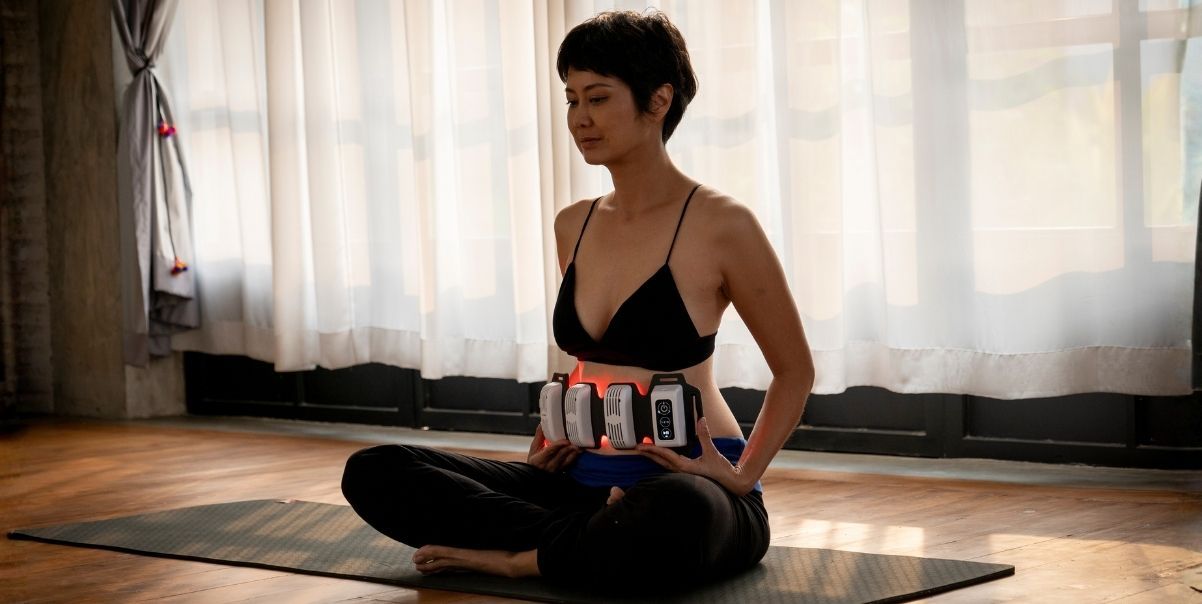
FlexBeam is designed for targeted red light therapy and can be used directly on areas such as:
- Lower abdomen
- Pelvic area
- Lower back
- Abdominal and gut area
Because FlexBeam is placed directly against the skin, it delivers targeted red and near-infrared light to the specific area being treated.
Many people use FlexBeam to:
- For period pain
- To support the body during periods of stress and fatigue
- As part of a recovery routine
- To support sleep and relaxation
One Recharge Health customer describes her experience:
“I started using FlexBeam on my abdomen in the evening as part of my routine. After a few weeks, I noticed less tension, better sleep, and an overall sense of feeling calmer throughout my cycle.”
Try FlexBeam and feel the difference for yourself!
Take control of your hormonal health
Hormonal imbalance is rarely caused by one single factor. More often, it’s the combination of stress, sleep, lifestyle, inflammation, and cellular energy that influences how your body functions.
That’s why many women find that taking a holistic approach to supporting the body can be more beneficial than simply trying to manage individual symptoms.
By:
- Prioritizing sleep
- Reducing stress
- Supporting gut health
- Giving your body more cellular energy
you can create better conditions for hormonal balance over time.
Want to learn more about women’s health and how red light therapy can support your body? Explore our digital Women’s Health Guide today, or discover how FlexBeam can help support your cells and hormones with the energy they need.
Frequently asked questions about hormonal imbalance
There’s no single solution that works for everyone. However, many people find that focusing on sleep, stress reduction, a consistent circadian rhythm, nutrient-rich foods, and supporting cellular energy and recovery can help improve hormonal balance.
Research on photobiomodulation suggests that red light therapy may help reduce pain and inflammation in some women. Many people use red light therapy as a complementary approach for period pain and tension in the pelvic area.
Hormones can be influenced by factors including:
- Stress
- Sleep
- Light exposure
- Diet
- Inflammation
- Gut health
- Physical activity
- Menopause and different stages of life
Small, ongoing stressors can add up over time and affect how the body regulates hormones and energy.