Can red light therapy cause side effects? A look at the research, safety, and who should be cautious


Red light therapy has become increasingly popular in recent years, but many people have the same questions before deciding whether to try it:
- Can red light therapy cause side effects?
- Is it safe to use at home?
- Can you use red light therapy during pregnancy?
- What if I have cancer or have had cancer in the past?
- Can red light therapy damage your eyes?
These are valid and important questions.
In this article, we’ll look at what the research actually says about the safety of red light therapy, which side effects can occur, who should take extra precautions, and how to use red light therapy safely.
Can red light therapy be harmful?
Red light therapy is generally considered safe when used correctly. No serious side effects have been documented at standard therapeutic doses.
Photobiomodulation, the scientific term for red light therapy, has been studied for several decades. There are thousands of published studies investigating both its effectiveness and safety in areas such as pain management, recovery, skin health, and wound healing.
Unlike UV light, red light therapy does not contain ultraviolet radiation, which can damage the skin and increase the risk of skin cancer. It also does not work by heating the tissue in the way infrared heat lamps or saunas do. Instead, specific wavelengths of red and near-infrared light are absorbed by cells, where they can support normal cellular energy production.
That doesn’t mean red light therapy is appropriate in every situation. However, for most healthy adults, it is considered safe when used according to the manufacturer’s recommendations.
Want to learn more about how red light therapy works? Read our complete guide to red light therapy.
What side effects can occur?
Most people experience no side effects when red light therapy is used correctly.
If reactions do occur, they are generally mild and temporary.
Some people may experience:
- a mild sensation of warmth during treatment
- slight skin redness immediately after use
- temporary tingling in the treated area
- tenderness if the treatment is longer or more intense than recommended
These reactions usually resolve on their own.
Side effects from improper use
Most reported side effects are associated with incorrect dosing or improper use of the device, such as:
- treating an area for longer than recommended
- treating the same area repeatedly without enough time between sessions
- using products of unknown quality or with inappropriate light intensity
- exposing the eyes directly to intense light without appropriate protection
That’s why it’s important to follow the instructions for use and choose products designed around established treatment protocols.
Expert tip from Dr. Zulia Frost, Clinical Director at Recharge Health: The effects of photobiomodulation depend on delivering the right dose of light to the right depth within the tissue. Devices with insufficient light output or a less effective light delivery design may struggle to deliver enough energy to stimulate the body’s biological repair processes, particularly in deeper tissues.
What about long-term use: is it safe to use red light therapy every day?
Yes. For most people, daily use can be perfectly safe when treatment stays within the recommended doses.
Research on photobiomodulation actually suggests that the body responds best to moderate, consistent treatment.
More isn’t necessarily better.
In red light therapy, this is often described as a dose-response relationship. Sessions that are too short may have a limited effect, while very long sessions don’t necessarily produce better results either.
That’s why most manufacturers recommend shorter, regular sessions rather than prolonged treatments.
Is red light therapy safe for everyone?
For most people, yes. However, there are certain situations where it’s a good idea to talk to your doctor before starting treatment.
Can I use red light therapy if I have cancer?
This is one of the most common questions we receive.
Red light therapy can influence cellular energy production through the mitochondria. So, understandably, many people wonder whether the same mechanism could also stimulate cancer cells.
At present, there is no evidence that red light therapy promotes cancer development when used normally. However, research on its use during active cancer treatment is still limited.
For that reason, most experts recommend taking a cautious approach.
If you are currently undergoing cancer treatment or have recently completed treatment, you should always discuss red light therapy with your treating physician or oncologist before using it.
This recommendation is based on precaution, not because red light therapy has been shown to be harmful.
Can you use red light therapy during pregnancy?
There is also no evidence showing that red light therapy is harmful during pregnancy.
At the same time, few clinical studies have specifically examined its use in pregnant women.
Because of this lack of research, a precautionary approach is recommended.
If you’re pregnant and considering red light therapy, we recommend discussing it with your doctor or midwife first.
Who else should take extra precautions?
It may also be a good idea to consult a healthcare professional if you:
- take medications that make your skin more sensitive to light
- have an active infection or high fever
- have epilepsy and are sensitive to flashing lights
- have recently undergone surgery
- have a skin condition that is aggravated by light therapy
- have a blood clot or active bleeding
- have an acute systemic infection
- have a heart condition
For most people in these situations, this is simply an additional safety precaution.
Can red light therapy damage your eyes?
Red and near-infrared light are not the same as UV radiation and are not known to damage the skin or increase the risk of skin cancer. However, it’s still important to take precautions when it comes to your eyes.
Avoid looking directly into high-intensity light sources for extended periods, particularly at close range. Some devices come with protective eyewear or recommend using it when treating areas near the face.
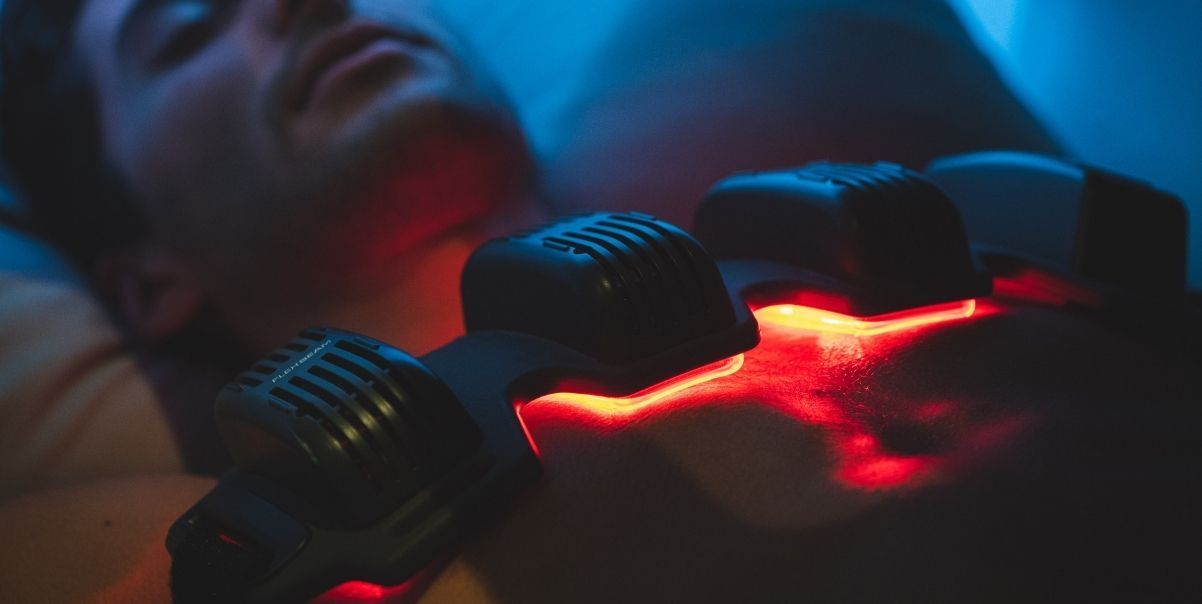
FlexBeam, our red light therapy device, is designed to be placed directly against the body rather than pointed toward the eyes. When used normally and according to the instructions, the risk of eye damage is very low.
If you have an eye condition or have recently undergone an eye procedure or surgery, we recommend consulting an ophthalmologist or other healthcare professional before starting red light therapy.
Is red light therapy safe to use at home?
Yes. For most people, red light therapy is safe to use at home, provided you use a high-quality device and follow the manufacturer’s instructions.
Modern devices often feature preset treatment programs designed to make it easier to use an appropriate dose. This can help reduce the risk of both under- and overtreatment.
To use red light therapy safely at home, we recommend that you:
- follow the recommended treatment time
- place the device directly against the skin if recommended by the manufacturer
- avoid exceeding the recommended number of treatments per day
As with many therapies, consistent, moderate use is more important than occasional long sessions. More isn’t necessarily better.
In short: How to use red light therapy safely
For most people, safe use comes down to a few simple principles:
- Follow the recommended treatment time.
- Avoid looking directly into the light source.
- Use products with established treatment protocols.
- Consult your doctor if you’re pregnant or have a serious medical condition.
FlexBeam was designed with safety as a core consideration, with preset treatment protocols and doses developed for safe use at home.
Summary
Red light therapy is one of the most extensively studied forms of light therapy and is considered safe for most people when used correctly. The most common side effects are mild and temporary, and serious complications are rare with proper use.
However, there are certain situations - such as pregnancy, active cancer treatment, or the use of medications that increase sensitivity to light - where it’s a good idea to consult a healthcare professional before getting started.
Curious about how red light therapy could fit into your daily routine? FlexBeam is designed for safe at-home use, with preset treatment programs based on clinically tested doses. Explore FlexBeam and learn more about how red light therapy can be used safely and easily at home.
Frequently asked questions on red light therapy and safety
When used correctly, red light therapy is considered safe for most adults. The most common reactions are mild and temporary.
Yes. Modern devices are designed for safe at-home use when used according to the manufacturer’s instructions.
Not in the same way as UV light. However, you should avoid looking directly into high-intensity light sources and follow the manufacturer’s recommendations.
If you are currently undergoing cancer treatment or have recently completed treatment, you should always discuss red light therapy with your treating physician or oncologist before using it.
There is no evidence showing that red light therapy is harmful during pregnancy, but research specifically involving pregnant women is limited. For that reason, we recommend consulting your doctor or midwife before use.