Guide: What helps with muscle pain? Common causes and treatments that work


Muscle pain is one of the most common causes of discomfort and reduced quality of life. It can appear suddenly after exercise or physical strain, but it can also develop gradually as a result of stress, repetitive movements, or underlying health conditions. For some, the pain resolves on its own within a few days, while others experience recurring or persistent symptoms that affect work, everyday activities, and sleep.
At Recharge Health, we hear every day from people who want to understand why muscle pain occurs, which treatment options are actually supported by evidence, and what they can do themselves to live with less pain. That’s why we created this guide.
In this article, we’ll take a closer look at:
- Common causes of muscle pain
- The difference between acute and chronic pain
- Different treatment options
- How red light therapy can support the body’s natural recovery processes
What is muscle pain and why does it occur?
Muscle pain occurs when muscles or the surrounding tissues become irritated, overworked, or injured. The pain may be localized to a specific muscle, or it may be more widespread and affect several areas of the body at the same time.
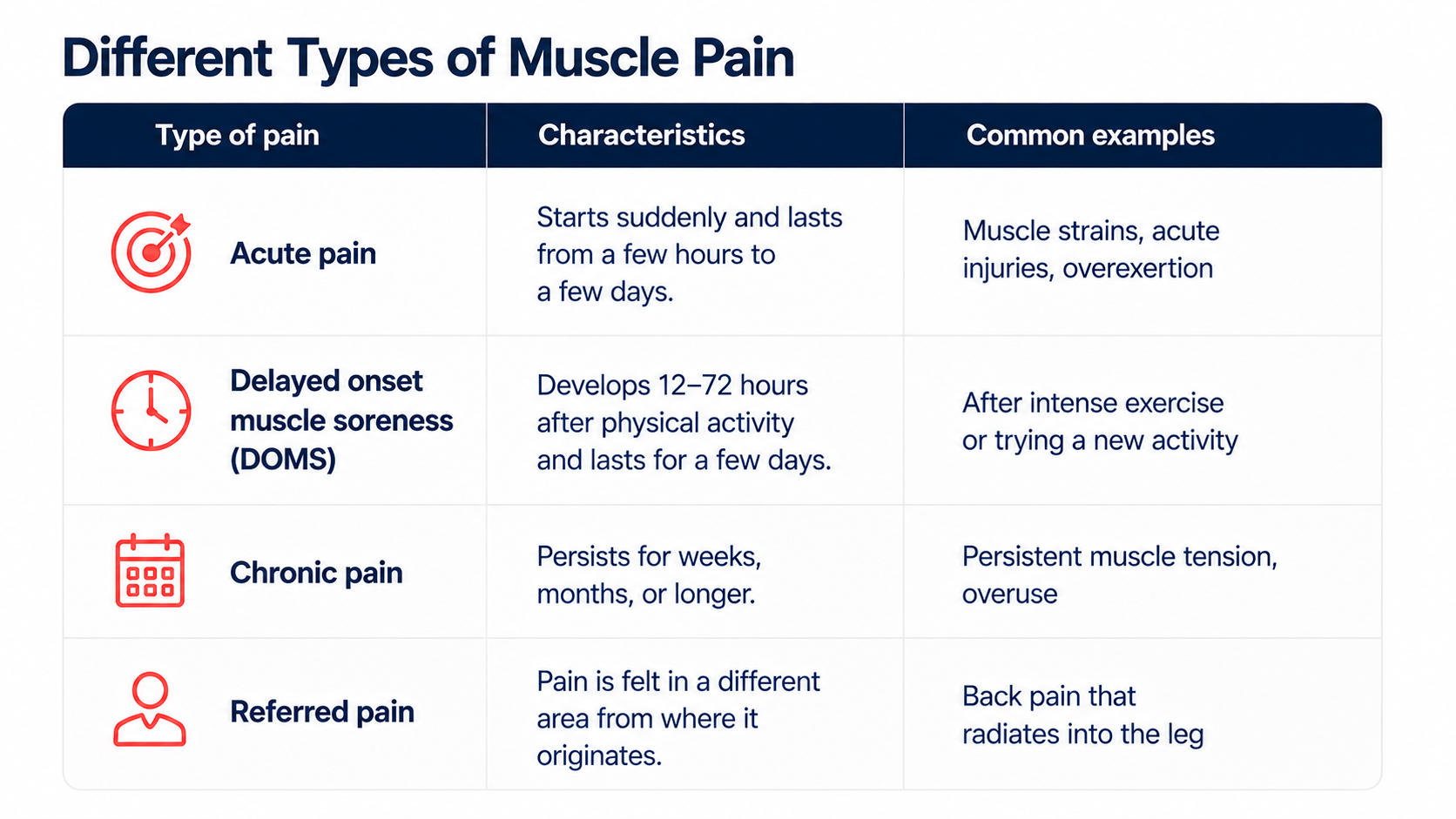
There are many different causes of muscle pain, but some of the most common include:
- Overuse after physical activity or strenuous work.
- Repetitive movements or prolonged sitting.
- Stress and muscle tension.
- Inflammation in the muscles or surrounding tissues.
- Viral infections or other illnesses.
- Injuries such as muscle strains or small tears in the muscle fibers.
When a muscle is subjected to more stress than it is used to, small amounts of damage can occur in the muscle fibers. This is a natural part of the body’s adaptation process and is normally repaired with adequate rest and recovery. However, if the strain is too great or the body does not have enough time to recover, the pain may persist or return.
Stress can also play an important role. Many people find that prolonged psychological stress leads to increased muscle tension, particularly in the neck, shoulders, and back. Over time, this can contribute to persistent pain and reduced mobility.
Dr. Zulia Frost, Clinical Director at Recharge Health, explains: “Muscle pain is rarely caused by a single factor. We often see a combination of physical strain, recovery, lifestyle, and individual factors influencing how long the pain lasts.”
Muscle pain throughout the body and chronic pain
Some people experience pain in one specific muscle after exercise or an injury. Others experience pain in several areas of the body at the same time, without there always being one clear explanation.
With acute muscle pain, the cause is often known. The pain commonly develops after an unfamiliar activity, an injury, or a period of increased physical strain, and usually improves within days or weeks as the body has time to recover.
Chronic muscle pain is pain that persists over a longer period or keeps coming back. It can affect physical function, energy levels, and quality of life, and is often caused by a combination of factors. Prolonged stress, repeated overuse, underlying health conditions, and previous injuries can all contribute to persistent pain.
When muscle pain becomes long-lasting, it’s important to look at the bigger picture. Treatment isn’t just about relieving symptoms, but also about identifying and addressing the underlying causes. For many people, this involves a combination of appropriately adjusted physical activity, guidance from a healthcare professional, and therapies that support the body’s natural recovery processes.
It’s also important to be aware of symptoms that should be evaluated by a doctor. If muscle pain develops without a known cause, continues to get worse, or is accompanied by fever, significant muscle weakness, or other concerning symptoms, you should contact a healthcare professional for further evaluation.
From head to toe: Treating muscle pain in specific areas
Muscle pain can occur almost anywhere in the body. While many of the same treatment principles apply regardless of where the pain is located, the causes and symptoms can vary from one area to another.
Below, you’ll find a brief overview of some of the most common areas where muscle pain occurs. If you’re looking for more detailed information about a specific area, you can explore our dedicated guides covering the causes, symptoms, and treatment options in greater depth.

Do you have muscle pain in your back?
The muscles in your back are constantly working throughout the day, making them particularly vulnerable to overuse. Heavy lifting, prolonged sitting, poor ergonomics, or sudden movements can lead to pain and stiffness.
For most people, back pain is caused by muscle tension or overuse, and symptoms gradually improve with appropriate activity and treatment. If the pain persists or keeps coming back, it may be necessary to determine whether structures other than the muscles are also involved.
Do you have muscle pain in your back? The back muscles are under constant strain throughout the day and are particularly prone to overuse from heavy lifting, prolonged sitting, or poor ergonomics. In our complete guide to back pain, we take a closer look at the common causes of back pain and the approaches and treatments that can help.
Pain in the legs and feet
The muscles in your thighs, calves, and feet are put to work every day, whether through exercise, work, or normal daily activities. That’s why pain in the legs and feet is among the most common musculoskeletal complaints.
For active people, the pain is often caused by overuse following exercise or unfamiliar activity. For others, prolonged standing, repetitive strain, or reduced mobility can contribute to soreness and pain.
Most people improve with appropriate activity, adequate recovery, and a gradual return to exercise. If the pain persists or continues to get worse, it should be evaluated by a healthcare professional.
Do you have pain in your legs? Your legs handle a significant amount of strain throughout the day, whether from exercise, walking, prolonged sitting, or other physical activities. In our complete guide to leg pain, we take a closer look at common causes and the steps and treatments that may help relieve your symptoms.
Shoulder pain and inflammation
The shoulder is the most mobile joint in the body, which also makes it vulnerable to overuse and injury. Pain can develop in the muscles, tendons, or bursae, making it difficult to lift your arm or perform everyday activities.
For many people, shoulder pain develops gradually as a result of repetitive movements, prolonged sitting, or persistent muscle tension. Early treatment and appropriately tailored exercises can help reduce symptoms and restore normal function.
Your shoulders are active throughout much of the day and are particularly prone to tension and overuse due to prolonged sitting, repetitive movements, exercise, or poor working posture.
Read our complete guide to the causes of shoulder pain and how to relieve and treat it.
What works best for muscle pain? Pain relievers vs. natural relief
When muscle pain starts affecting daily life, most people want relief as quickly as possible. The right treatment depends on what’s causing the pain, how long it has lasted, and how severe the symptoms are.
For acute muscle pain, over-the-counter pain relievers can help reduce discomfort and make it easier to stay active. However, these medications primarily address the symptoms and may not address the underlying cause of the pain.
That’s why many people may also benefit from approaches that target the factors contributing to their symptoms. These can include:
- appropriate movement and exercise
- physical therapy or other professional guidance
- adequate sleep and recovery
- managing physical strain at work and during everyday activities
- heat or cold therapy when appropriate
- therapies that support the body’s natural repair and recovery processes
For people with persistent or recurring muscle pain, effective treatment often involves a combination of approaches rather than relying on a single solution.
Modern treatment options: Red light therapy as a complementary approach for muscle pain

Many treatments for muscle pain are designed to provide short-term symptom relief. Pain-relieving medications can be useful for acute pain, but they do not necessarily address the biological processes involved in pain and inflammation.
Red light therapy differs from traditional symptom relief by acting at the cellular level. The therapy uses specific wavelengths of red and near-infrared light that are absorbed by components within the mitochondria, the energy-producing structures of our cells. This interaction may help support the production of ATP, the primary form of energy cells use for normal function and repair.
Research also suggests that red light therapy may help modulate inflammation, support healthy blood flow, and promote the body’s natural recovery processes. This is why the technology is now used in rehabilitation and physical therapy settings, as well as by people looking to manage muscle pain at home.
It’s important to emphasize that red light therapy is not a substitute for medical evaluation when pain is caused by a serious illness or injury. For common musculoskeletal complaints, however, it may be a useful complementary therapy as part of a broader treatment plan.
Customer story: “I recover faster, feel less stiff, and it’s much easier to get moving. That helps me stay consistent with exercise—which is absolutely essential when you have a body like mine.”
If you’d like to learn more about how red light therapy can be used for pain, read our guide to pain relief.
For a deeper look at the technology and research behind the treatment, explore our complete guide to red light therapy.
In summary
Muscle pain can have many causes, from overuse and stress to injuries and persistent musculoskeletal conditions. For most people, a combination of appropriate activity, adequate recovery, and the right treatment offers the best path toward getting back to everyday life with less pain.
For persistent or recurring symptoms, it may be helpful to combine conventional treatments with approaches that support the body’s natural repair and recovery processes. Red light therapy is one option that has received increasing attention in recent years, with research suggesting that it may help reduce pain and inflammation in people with a range of musculoskeletal conditions.
The sooner you address what’s contributing to your pain, the better your chances of reducing symptoms and returning to normal activity.
Experience targeted pain relief with FlexBeam
FlexBeam is designed to make red light therapy easy to use at home. The device combines red and near-infrared light in a portable format, allowing you to target muscles and joints where you need it, whenever it fits your routine.
Frequently asked questions about muscle pain
The best treatment depends on what’s causing the pain. For common muscle pain caused by overuse or tension, most people benefit from a combination of light activity, adequate rest, and a gradual return to normal activity. Physical therapy may be appropriate for more persistent symptoms, and some people also choose therapies such as red light therapy as a complement to other treatments.
If the pain is severe, develops without a known cause, or persists for an extended period, it should be evaluated by a doctor or another qualified healthcare professional.
There’s no single answer that applies to everyone. For common muscle pain, complete inactivity is generally not recommended. Gentle movement and a gradual return to activity can help maintain mobility and support the body’s natural recovery process.
For acute muscle injuries, a short period of reduced activity may be necessary before gradually beginning rehabilitation. If you’re unsure what’s appropriate for your symptoms, consult a healthcare professional.
Muscle pain caused by exercise or overuse often improves within a few days. After heavier physical strain or a minor muscle injury, symptoms may last for several weeks.
Chronic muscle pain is generally defined as pain that lasts for more than three months. If your pain isn’t improving, keeps coming back, or interferes with your daily life, it’s a good idea to have it evaluated to identify the underlying cause and determine the appropriate treatment.