Can You Work Out When You're Sore? A Guide to Muscle Soreness


You wake up the morning after a hard workout. Your thighs feel like concrete, the stairs seem twice as long as usual, and you can feel every movement in your body.
Should you power through today’s workout, or take a rest day?
The short answer is that, in most cases, you can work out when you’re sore. But it depends on how sore you are, what kind of workout you’re planning, and whether you’re dealing with normal muscle soreness or something more serious.
At Recharge Health, we work every day with muscle recovery, recovery technology, and how the body responds to physical stress. In this article, we’ll explain why you get sore, how long muscle soreness typically lasts, when you should take it easy, and what you can do to support a faster recovery.
Why Do You Get Sore After a Workout? Our Experts Explain
Muscle soreness after a workout is usually caused by something called DOMS, or Delayed Onset Muscle Soreness.
DOMS occurs when your muscles are exposed to a type or level of stress they aren't fully accustomed to. This can happen after:
- Trying a new type of workout
- Lifting heavier weights than usual
- Doing more repetitions
- Running harder than usual
- A lot of eccentric exercise, such as downhill running or squats
During exercise, microscopic stress occurs within the muscle fibers. Your body responds with a natural repair process that can lead to soreness, stiffness, and reduced range of motion in the days afterward. This is normal and doesn't necessarily mean you've injured yourself.
You can learn more about the science behind delayed onset muscle soreness (DOMS) in this Cleveland Clinic article: What Is Delayed Onset Muscle Soreness (DOMS)?
Dr. Zulia Frost, physician and Clinical Director at Recharge Health, explains it this way:
“Delayed onset muscle soreness (DOMS) typically occurs 12–48 hours after unfamiliar or intense exercise, especially activities involving eccentric muscle contractions, where the muscle lengthens under load. The soreness is thought to result from microscopic damage to muscle fibers and surrounding connective tissue, which triggers an inflammatory response as the body begins the repair process. Although DOMS can cause temporary discomfort, it is a normal adaptation process that, over time, helps muscles become stronger and more resilient.”
How Long Does It Take to Get Sore After a Workout?
Most people begin to notice muscle soreness 12–24 hours after exercise.
Soreness is often at its worst 24–72 hours after the workout. It then gradually decreases as your body repairs and adapts to the muscle stress.
Is Being Sore a Good Sign?
Not necessarily.
Many people assume that being sore means their workout was especially effective, but that's not always the case.
You can make significant progress without getting sore, and you can experience severe soreness without having had an optimal workout.
Muscle soreness is primarily a sign that your body was exposed to a new or demanding type of stress.
How Long Does Muscle Soreness Last?
For most people, typical muscle soreness lasts 2–5 days.
How long you're sore depends on several factors, including:
- Training level
- Exercise intensity
- Age
- Sleep quality
- Nutrition
- How accustomed your body is to the activity
The more experienced you become with a particular type of exercise, the less sore you will typically become from the same workout.
If you're still experiencing significant soreness after more than a week, consider whether you may have an injury or another underlying issue.
Should You Work Out When You're Sore?
In most cases, yes. Light exercise can actually help you feel better by increasing circulation and reducing the sensation of stiffness.
That doesn't mean you should jump into another all-out workout targeting the same muscle groups.
A good rule of thumb is: the more sore you are, the lighter your activity should be.
Is It Good to Exercise When You're Sore?
Yes, exercising while you're sore can be beneficial as long as you adjust the intensity to match your level of soreness.
Active recovery may help support circulation, reduce stiffness, improve mobility, and make the recovery period more comfortable.
Good options include:
- Walking
- Easy cycling
- Mobility exercises
- Light jogging
- Swimming
However, heavy strength training with already very sore muscles may prolong the recovery process.
Want to learn more about how your body recovers? Read our complete guide to recovery.
When Should You Avoid Working Out?
It's important to distinguish between normal muscle soreness and a potential injury.
Be cautious if you experience:
- Sharp or stabbing pain
- Significant swelling
- Redness or unusual warmth
- Reduced function or mobility
- Pain that gets worse during activity
These aren't typical signs of normal muscle soreness and should be evaluated more closely.
Should I Jog When I'm Sore?
Yes. In many cases, an easy jog can be a good way to get your body moving and reduce the feeling of stiffness.
If you're only moderately sore, light jogging can work well as active recovery.
However, if your legs are very sore after a hard strength workout or race, it may be better to choose a walk or another low-intensity activity.
Read our guide to recovery after running for more specific advice for runners.
Is It Dangerous to Work Out When You're Sore?
No. For most people, exercising while experiencing normal muscle soreness isn't dangerous.
Typical muscle soreness is a natural part of how your body adapts to exercise.
The problem arises when you ignore your body's signals and continue training at high intensity without giving yourself enough time to recover.
With normal muscle soreness, light activity is often more beneficial than complete rest.
How to Get Rid of Muscle Soreness Faster: 4 Science-Backed Strategies
There is no miracle cure that will make muscle soreness disappear overnight. However, several strategies can support your body's recovery process.
Sleep
Sleep is one of the most important recovery tools available to us. During sleep, much of the body's repair and recovery work takes place, including processes involved in muscle repair and hormonal regulation.
For optimal recovery after training, competition, or an unusually demanding workout, aim for 7–9 hours of sleep per night, and consider getting a little extra, around 8–10 hours, during the first few nights after a particularly hard workout or race.
Read our article on sleep and recovery to learn more.
Movement
Sitting completely still can sometimes make your muscles feel even stiffer. Light activity increases circulation, which can support the body's natural recovery processes and help reduce the perception of soreness.
Try a 15–30 minute easy walk, light cycling at a comfortable pace, or simple mobility exercises. The intensity should be low enough that you can easily hold a conversation throughout the activity.
Hydration
Staying hydrated supports your body's normal recovery processes, including circulation, temperature regulation, and nutrient transport. Even mild dehydration can affect your energy levels, muscle function, and how you feel after exercise.
As a general guideline, aim for around 2–3 liters of fluids per day, and more if you've been sweating heavily or exercising hard. After a workout, replenish fluids gradually throughout the day. Water is usually sufficient, while electrolytes may be helpful when you've lost a significant amount of fluid through sweat.
Targeted Red Light Therapy
Red light therapy has received increasing attention in sports, recovery, and muscle health in recent years.
Unlike passive rest, red light therapy can be applied directly to the areas you've worked.
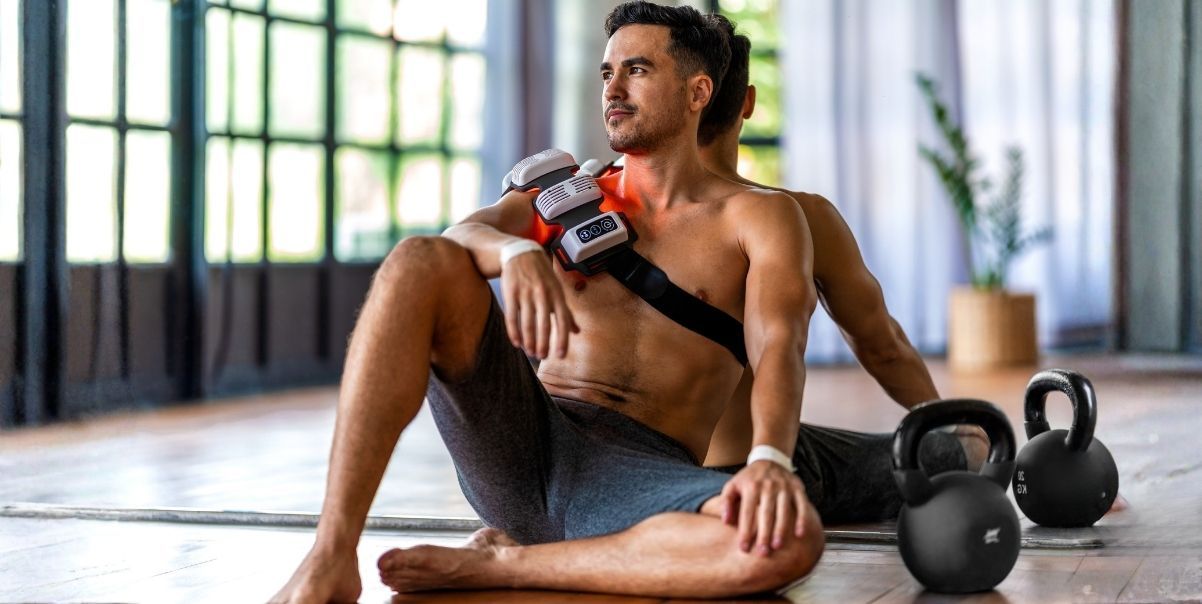
FlexBeam combines red and near-infrared light in a wearable format that can be used directly on sore muscles and areas experiencing high levels of physical stress.
The technology is used by athletes, including Martin Ødegaard, Casper Ruud, and many other elite performers who incorporate it into their recovery routines between training sessions and competitions.
Many users report that their muscles feel less stiff and more mobile after using FlexBeam as part of their recovery routine.
Frequently experience significant soreness after workouts, or looking for ways to support recovery from stiff muscles? Learn more about how red light therapy can support muscle recovery.
What Our Customers Say:
“I started using FlexBeam after hard workouts. It has become a regular part of my recovery routine because my body feels more ready for the next session.”
When Should You See a Healthcare Professional for Unusual Muscle Soreness?
Normal muscle soreness usually goes away on its own.
You should contact a healthcare professional if:
- Your soreness lasts more than a week without improving
- You experience severe swelling
- Your urine is dark in color
- You have severe or worsening pain
- You experience significant loss of function or mobility
In rare cases, extreme muscle breakdown can lead to a serious condition called rhabdomyolysis, which requires medical attention.
In Summary
Yes, in most cases, you can work out when you're sore.
The key is to adjust your training based on how your body actually feels. Light activity may support recovery, while pushing too hard on already stressed muscles can prolong the recovery process.
By combining quality sleep, movement, hydration, and targeted recovery tools, you can support your body's recovery and get back to training sooner.
Recover Faster from Muscle Soreness. Try FlexBeam risk-free and support your recovery after hard workouts.
Frequently Asked Questions About Muscle Soreness After Exercise
The most effective approach is to combine quality sleep, light movement, proper hydration, and good recovery habits. Many people also use red light therapy as a supplement to support their recovery routine.
Yes, in most cases you can exercise when you’re sore. If the soreness is significant, consider choosing lighter activities such as walking, mobility work, or low-intensity training.
Unusually intense muscle soreness can be caused by unfamiliar movements, a sudden increase in training intensity, insufficient recovery, or, in some cases, an injury.
Normal muscle soreness is not dangerous. However, if the pain is sharp, accompanied by swelling, or significantly affects your movement and function, you should be more cautious and consider seeking medical advice.